The Critical Role of Third-Party Testing in Compound Research
The Baseline of Laboratory Consistency
Consistency is the foundation of any reliable research protocol. When working with delicate molecular structures, even microscopic variances in batch purity can significantly skew analytical outcomes. Establishing a strict baseline requires sourcing compounds that are entirely free of unanticipated degradation or structural contaminants.
Why In-House Testing Is Not Enough
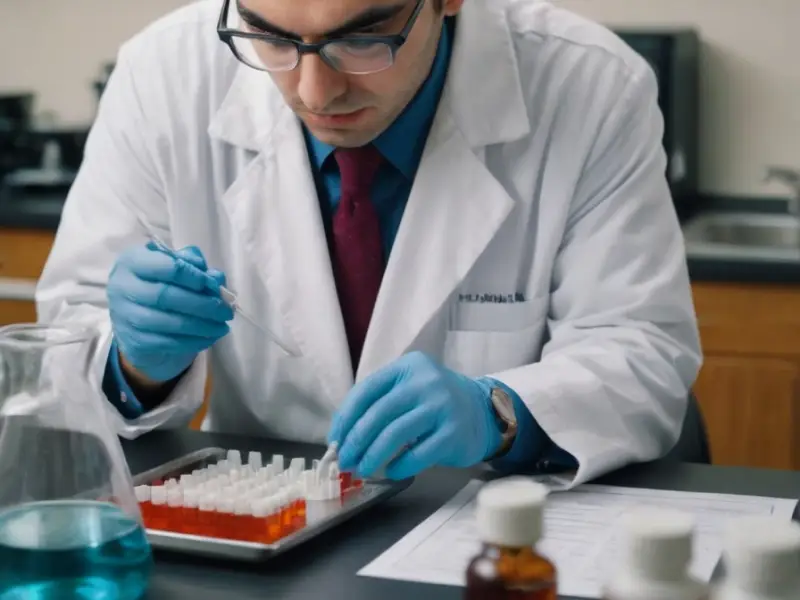
While internal quality control is a necessary first step, it inherently carries a risk of calibration blindness. Independent, third-party laboratories provide an objective verification of a compound’s molecular weight and purity profile. By utilizing external high-performance liquid chromatography (HPLC) and mass spectrometry (MS), researchers can guarantee that the material strictly aligns with its baseline chemical specifications.
Understanding Certificates of Analysis (CoAs)
A Certificate of Analysis is not just a regulatory formality; it is the structural blueprint of your compound’s integrity. A reliable CoA must be lot-specific and clearly outline the following metrics:
- Purity Percentage: The exact concentration of the active compound.
- Impurity Profiling: Identification of any residual solvents or synthesis byproducts.
- Testing Methodology: The specific analytical techniques utilized to verify the molecular structure.
Protecting Your Protocols
Introducing unverified materials into a controlled environment compromises the entire dataset. Prioritizing compounds backed by rigorous independent testing—such as our NAD+ research compound—ensures that your laboratory resources are utilized efficiently and accurately, allowing you to proceed with absolute confidence in your analytical results.
CoAs, Purity Metrics, Research Compounds, Third-Party Testing